Five year plan is done and gone
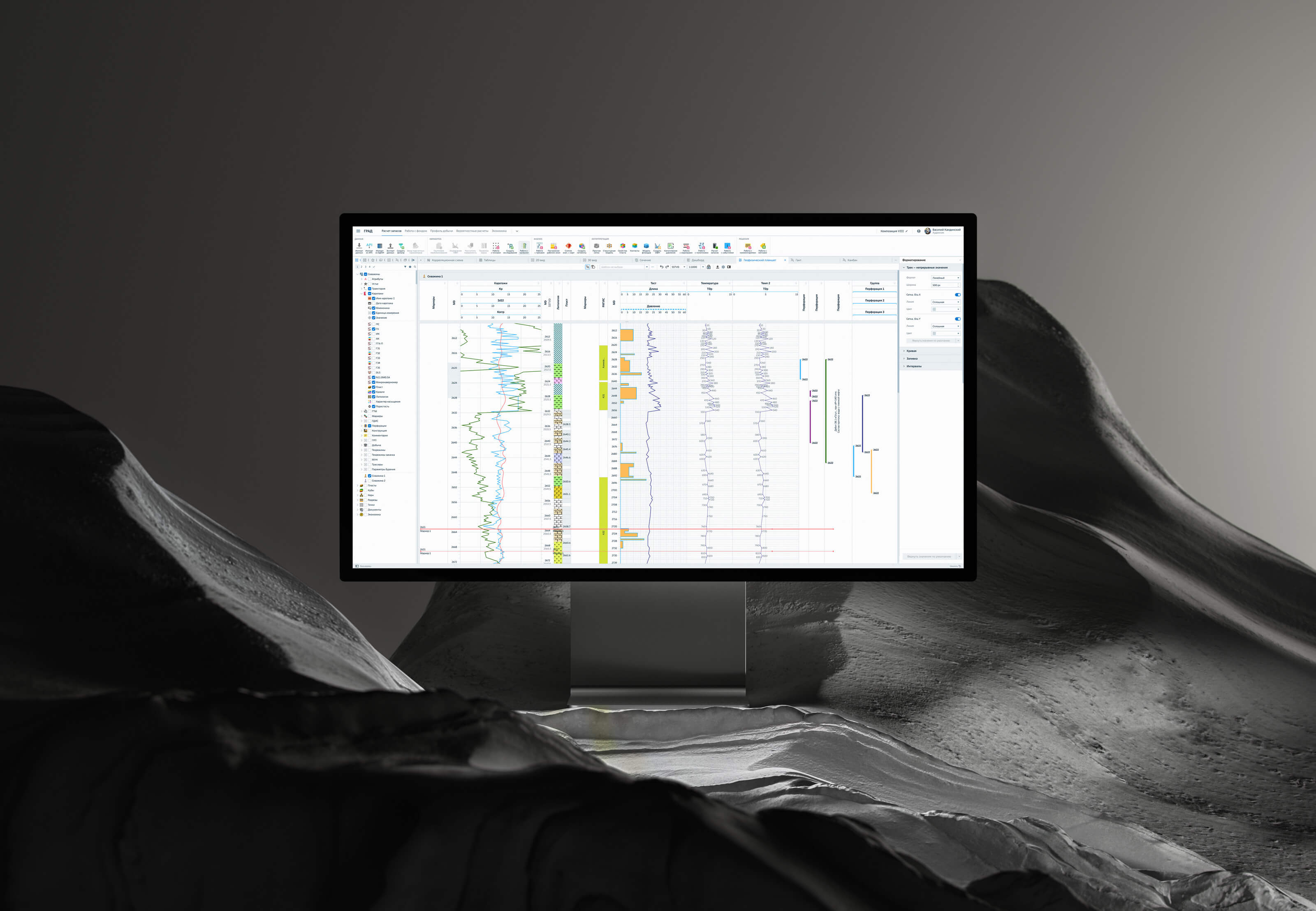
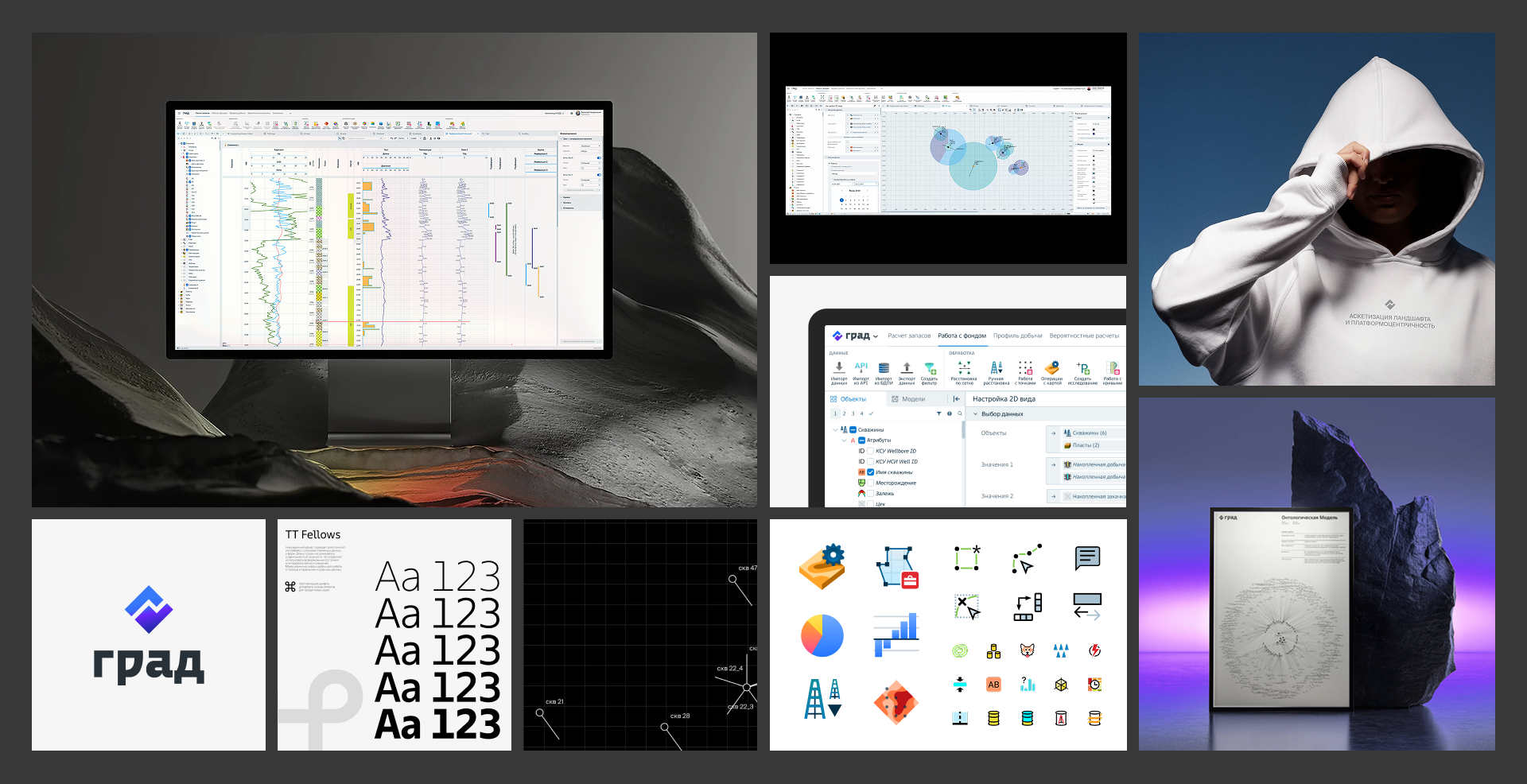
Graphic design is part of my portfolio, but it's been more of a guilty pleasure for a while now. For the last five years, I've been responsible for the design of the GRAD service for geologists and analysts at Gazpromneft. During this time, the project has evolved from conceptual design to active scaling and production. From now on, the project will live and develop without me, and I'll take the opportunity to take stock and reflect on the lessons learned.
(1) Design principles are universal
I previously wrote that I designed a book and was invited to create a product. Any design product is a system of relationships between the general and the specific. It's about structure, composition, and the craft of design. And the two "layers" between which this solution lies are the business and the organizational. In my mind, they're also about structure and composition.
At this level of abstraction, parallels emerge, and it becomes clearer that the design of a publication, a product, and branding have much in common, and the designer becomes a little closer to the Renaissance master, to a humanistic approach and a belief in the limitless potential of man.
(2) Design synthesis
Branding and product are one and the same. Dividing design into print, communications, product, branding, and graphics is purely a matter of common sense and convention. Even in a B2B product, branding and image are important because users spend hours interacting with it, and this is a long-term and crucial point of contact with the company as a whole. Therefore, yes, product design must be neat and beautiful, even in B2B, when "no one sees it." And yes, even a painting or a magazine illustration serves a purpose and exists in a context.
At GRAD, we used the "standard" web, studied industry interface standards for similar tasks, and even delved into game development, delving into the interfaces of 4K strategy games.
(3) Designer - observer
It's a well-known saying that "patterns aren't in closets, they're in our heads." I had to learn that a complex, unusual, unfamiliar interface, with a multitude of controls and complex, multi-variant scenarios, isn't always so due to lack of thought, and sometimes due to genuinely complex scenarios and tasks. These require immersion, with all the terminology and an understanding of how the work of an unusual, non-massive user works. And this ping-pong between "it's complicated, we need to simplify it" and "it doesn't solve the problem, we need to make it more complex" became an invaluable experience. First, observing, studying, questioning your habits and knowledge, putting your ego aside, and then approaching the work with this in mind—that's design.
(4) Do it right from the start
Beautiful agile shenanigans—"We'll do this bit here, and the rest will be neatly put in the backlog and finalized later" and "let's compromise here so it makes it into the release, and then we'll refactor it." No, not later. You won't refactor it. You won't get it out of the backlog. Never. It will either sit there like dead weight because it's not needed, or everyone will stumble over it because it's left over.
You have to do it right from the start. I'd even say—as well as your strength and time allow, without sparing yourself. That's at least a demand on yourself, and a slightly softer one on the team. All the mistakes that arose were because I wasn't sufficiently stubborn or insufficiently assertive. In an ideal world, things wouldn't be like this, where Scrum works and estimates are accurate. But we live in a different world.
(5) Team
This is the most important thing about this work. I saw that the Corporation has flexible teams of driven, experienced professionals. That meetings aren't about formal attire, but about brainstorming and action. That there can be trust in specialists and a focus on results for users.
Working with a team of systems analysts is a true joy! My design life has become divided into before and after—how could I have lived without you!)
The design team is absolutely amazing. It was incredible, and I thoroughly enjoyed designing a complex interface side by side with you, tinkering with the design system, fixing aluminum bugs, and going through the Discovery process 15 times on a single feature. It was challenging, fun, and incredible—thank you!
I still haven't finalized the product case study; it's on the website. I'll try to finish it up for the design platform, just for kicks.
Moving on. Design to all!